
Fablingo: a language-course studio that writes and runs itself
Most AI content pipelines are one prompt with a video wrapper. I built the opposite — a studio, not a generator: a multi-model system that researches a curriculum, writes it as a story, casts it with recurring characters, illustrates and voices every scene, renders it on a fleet of machines, and publishes to YouTube on a schedule. In six languages, with almost no human in the loop.






Fablingo is a network of faceless YouTube language-course channels — Spanish, Lebanese Arabic, Polish, Modern Standard Arabic, English-for-Poles, and English-for-Lebanese — with the courses themselves published at fablingo.academy. There is no presenter, no camera, no editor. The interesting part isn’t that AI made a video — it’s the engineering around the AI that makes the output consistent, on-model, pedagogically correct, and safe to publish at scale.
Throughput isn’t the constraint — cadence is a decision. The pipeline can generate faster than the channels publish. Episodes go out two a week per course because a serialised story only works if a cohort can keep pace with it; dumping a finished curriculum into a playlist is how courses get abandoned at lesson four. The engine is built for scale and throttled on purpose.
The channels — six live, one engine






See the intros — "Meet the Neighbourhood"
Every channel opens with a live introduction. Click any to watch on YouTube.
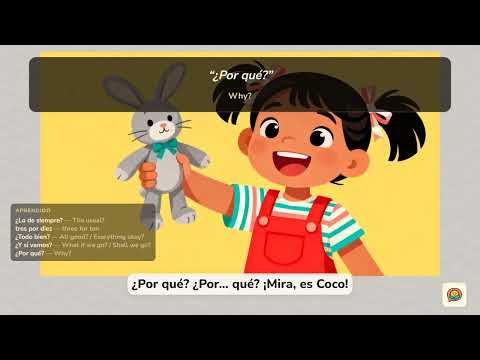 Fablingo Español
  Fablingo Lebanese
 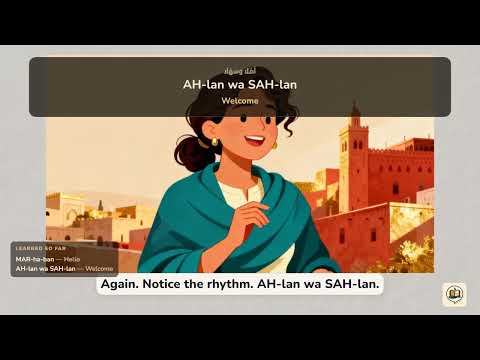 Fablingo Arabic
 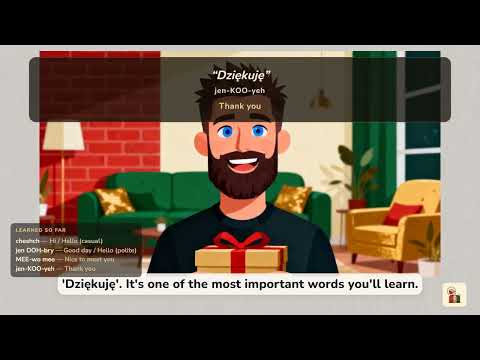 Fablingo Polish
 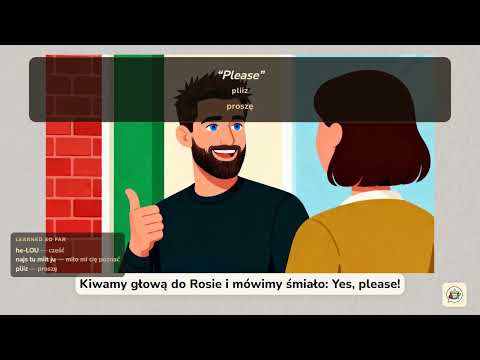 Fablingo Angielski
 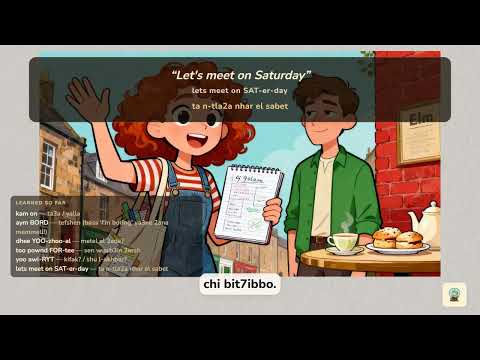 Fablingo Englizi
 The front door — fablingo.academy
The channels are where the lessons play; fablingo.academy is where they become a course.
“Story-driven language courses you can actually finish. Real dialogue, spaced review, one neighbourhood of characters — free on YouTube, organised here.”
- Courses, in orderEvery channel’s episodes organised into a course you can start at lesson one and actually finish — instead of guessing at a YouTube upload list.
- A method, stated plainlyComprehensible input through a continuing story: a fixed cast and setting carry the plot, so vocabulary arrives attached to something that happened rather than to a word list.
- Speak from day oneEvery episode has “say it with me” beats. Speaking is physical — the course makes you do it out loud from the first lesson.
- Spaced review, built inPhrases come back because the characters need them again, plus review episodes conducted entirely in the target language.
- Materials beyond the videoDialogue transcripts, flashcards, and write-ups of the traps specific to your native language — the interference patterns that actually slow you down.
- Free, and released on a cadenceTwo lessons a week per course, free on YouTube, indexed and searchable here. No paywall, no account required to watch.
How an episode is made
- Curriculum → brief A locked, CEFR-aligned curriculum is the source of truth — teacher of the day, the grammar taught "in disguise", the can-do outcome, exact phrases, and the story beat. The AI obeys it; it doesn’t improvise it.
- Serialised-story writer A large model drafts the lesson as a chapter in an ongoing neighbourhood story. Every key phrase gets a full teaching cycle — it lands in a character’s line, the host breaks down the hard sounds, then "say it with me", practice, and later recycling so it sticks.
- Independent validation A different model audits the draft against the locked plan — is every phrase taught, is the target text exact, is the story coherent, is the length real — and repairs gaps rather than rubber-stamping. Author and editor are never the same model.
- Assets per scene Native narration and a house-style illustration are generated for every scene. A vision model validates each image against the lesson topic and regenerates on a corrected prompt before it can ship — so words and pictures never silently drift apart.
- Distributed render The server bakes a render payload and hands it to a fleet of render workers — ordinary desktops that claim jobs, render the hand-drawn animation in parallel, and chunk-upload the finished MP4. Add a machine, get more throughput.
- Self-scheduled publish Episodes upload private, then a scheduler releases them at each language’s local prime time on a fixed cadence, spacing uploads so no channel spikes its quota. The whole network can be scheduled months ahead and left to publish itself.
Every stage is idempotent and checkpointed — an interrupted run resumes for free, without re-spending tokens, images, or audio.
Cross-LLM authoring — the right model for each job
Fablingo isn’t one model doing everything; it’s an orchestra of models cross-checking each other. An author model writes the lesson-story; a separate validator model audits it against the locked curriculum; a vision model judges every illustration against the topic; targeted generators fill deterministic gaps like on-screen pronunciation cues. A single model is confidently wrong in ways that are hard to catch — two models with different roles catch each other’s mistakes long before anything reaches a viewer. That’s a reliability strategy, not a gimmick.
The rule that makes it sound human
The single most important constraint: written ≠ spoken. The narration is read verbatim by a text-to-speech voice that pronounces native text perfectly but mangles phonetic respellings. So the host always speaks the real word in its native script, while the pronunciation aid (“MEE-wo mee”) lives only on the screen overlay — audio and caption always in lockstep. One channel even teaches English to Lebanese speakers, which flips who narrates and in which script, and the on-screen card logic follows the inversion automatically.
Publishing autonomously means refusing to ship anything broken
- Silent-render gate: a video whose audio is below a volume floor is blocked and retried — not "does an audio stream exist" but "does it actually make sound".
- No blank cards: a scene missing its illustration refuses to render rather than shipping a blank frame.
- No clipped endings: the final scene extends to cover the true concatenated audio length, so the sign-off is never cut mid-word.
- On-topic imagery only: the vision validator keeps every frame relatable and clean — never anatomy, gore, or garbled text.
- Platform compliance: the system tracks each channel’s YouTube verification state and routes work accordingly, so it never burns quota on uploads a channel can’t accept.
Why this matters if you’re adopting AI
Fablingo is a study in making generative AI dependable: treating curriculum and story as structured data, orchestrating multiple models as author / editor / illustrator with independent cross-checks, and enforcing hard invariants that let it publish without a human babysitter. That’s the difference between “I prompted an AI to make a video” and “I built a studio that runs itself” — and it’s the same capability I bring to companies through my AI Transformation work.